What NYC public libraries actually offer beyond books
Three separate library systems, three separate cards, and a stack of free classes, museum admissions and bookable rooms that most New Yorkers never touch. Here is how the pieces fit together.
By Alex Oz · · 8 min read
Three separate systems, three separate cards
New York City does not have one public library. It has three, and they are operationally distinct organizations. The New York Public Library covers Manhattan, the Bronx and Staten Island across 92 locations. Brooklyn Public Library covers Brooklyn. Queens Public Library covers Queens. They share a city and very little else: separate catalogs, separate websites, separate event calendars, separate cards.
The practical consequence catches people out constantly. Queens Public Library states plainly that its cards cannot be used to check out materials at the New York Public Library or Brooklyn Public Library, or to access their databases. NYPL says the same thing in reverse about returns — material borrowed from an NYPL branch cannot be dropped off at a Brooklyn or Queens branch. If you live in Astoria and work near Bryant Park, one card does not cover both ends of your day.
The fix is simple and almost nobody bothers: get all three. Eligibility at each system is written at the state level, not the borough level, so a Brooklyn resident qualifies for a Queens card and a Queens resident qualifies for an NYPL card. Three cards means three catalogs, three hold queues, three sets of databases and three event calendars to work through. The only real cost is three renewal dates to keep track of.
Getting a card, and what the card actually is
NYPL's rule is that any person who lives, works, attends school or pays property taxes in New York State is eligible for a card, free of charge. Brooklyn uses nearly identical language — lives, works, pays property taxes or goes to school in New York State. You do not have to live in the borough, or even in the city. Working here counts. Being enrolled in school here counts.
Adults and teens can start online at any of the three, but what you get immediately is not a full card. At NYPL, an online application returns a barcode and PIN, which is enough to place holds and make research requests; NYPL is explicit that you need a physical card to borrow materials, search the Library's databases or reserve a computer. Brooklyn issues what it calls a Welcome Card, a barcode and PIN delivered on the spot when you register online. In both cases the online credential is provisional. Turning it into a full card means walking into a branch.
Bring identification showing your name and address. Queens requires valid identification of name and address, and NYPL asks new applicants whose New York State address it cannot recognize to validate in person. Children are handled differently by system. NYPL requires applications for children 12 and under to be completed and signed in person by a parent or guardian, and since October 2022 has not required children and young adults to show proof of identification to validate a card. Queens issues a juvenile card that limits children under 12 to children's CDs, DVDs and video games unless a parent opens up access, and it will issue a card for an infant.
Expiration differs by system, and this is the detail that quietly breaks things. NYPL cards for cardholders in the New York metro area and New York State expire and must be renewed every three years, and cannot be renewed by phone — metro cardholders renew in person. Queens issues cards for a five-year period, one year for out-of-state customers. An expired card does not announce itself. You find out when a database login fails or a museum pass reservation will not go through.
Out of state is where the free part ends. Brooklyn no longer offers standard memberships to people outside New York State and instead sells a digital-only eCard, ranging from $75 for one year to $200 for three, which covers digital collections and online resources only. The exception is Books Unbanned, Brooklyn's free eCard for people aged 13 to 21 living outside New York State, good for one year with the option to renew, granting access to the library's entire digital collection.
Culture Pass: free museum admission on your library card
Culture Pass is the strongest single argument for keeping a card current. It gives cardholders of all three systems free admission to a long list of New York City cultural institutions — the Metropolitan Museum of Art, the Museum of Modern Art, the Guggenheim, the Brooklyn Museum, the American Museum of Natural History, the Frick Collection, Cooper Hewitt, the Museum of the City of New York, the New York Botanical Garden, Brooklyn Botanic Garden, El Museo del Barrio, the Brooklyn Children's Museum, the Museum of Jewish Heritage, and performance venues including Carnegie Hall. More than a hundred organizations participate.
The rules are specific. Culture Pass is for cardholding patrons 13 and older. You can reserve one pass per cultural institution per calendar year, with a maximum of four active reservations at any one time. What a pass admits varies by venue: some offer passes covering two adults or a family of four, while live performances typically admit one person. The individual listing tells you which, and it is worth reading before you plan around it.
Booking follows a fixed rhythm. Passes become available at midnight on the first of every month for the following month. Weekend slots at the largest institutions go quickly; a weekday at a smaller museum will often sit available for weeks. If there is something specific you want, put a reminder on the first of the month rather than checking at random.
Two rules punish carelessness. Once you print or download your pass you cannot cancel the reservation, and library staff cannot cancel it for you. And if you reserve a pass but do not use it, you will not be able to book that institution again until the next calendar year. Cancel the moment your plans change, before you print anything.
The card requirement here is stricter than anywhere else in this guide. Culture Pass accepts regular, full-service library cards only. eCards, Welcome Cards and Educator Cards are not eligible, and NYPL virtual cards are not eligible either. If you registered online and never went into a branch to finish, this is the thing you will find you cannot do.
The free classes, by type
Each system runs its own instruction program, and the three differ in shape rather than quality. NYPL alone reports thousands of free programs a year across its 92 locations. None of it costs money, and much of it does not require you to be a cardholder to sit in the room.
Technology
All three systems, beginner through certificate
NYPL's TechConnect is the largest single block of this: the Library offers more than 80 free technology classes across the Bronx, Manhattan and Staten Island, running from computer basics through coding, photo editing and audio production. Much of it is built as short series rather than one-off sessions — Microsoft Office for beginners, iPad, social media — so the value comes from committing to a run of dates.
Queens runs digital literacy as workshops, one-on-one assistance and the Queensbridge Tech Lab, and offers Northstar Digital Literacy Certificate testing, which produces a credential you can put in front of an employer. Both NYPL and Queens run a program called Neighborhood Tech Help: free, one-on-one basic tech support. That is the right thing to book when the problem is your own phone or laptop rather than a skill you want to learn.
English, literacy and high school equivalency
Enrollment cycles, not drop-in listings
Brooklyn's Adult Learning program is the most structured of the three. Its ESOL offering covers English conversation practice groups, literacy classes for all reading levels, business English, and integrated education and training classes that pair English instruction with an occupational certificate — front desk representative, hospitality and medical billing among them. High school equivalency runs two ways, the GED exam or NEDP, with pre-HSE preparation and a Fast Track option for people who need only one or two subjects. The Enhanced Young Adult Literacy Program is the version for 17-to-24-year-olds, pairing an HSE diploma with a national certification.
Queens runs an Adult Learner Program covering ESOL, Adult Basic Education and high school equivalency instruction out of dedicated Adult Learning Centers, plus Young Adult Learning Services for ages 16 to 24. NYPL runs its own free English classes on the education side of its site.
The thing to understand is that these are courses with intake, not events you drop into. Enrollment happens on the program's schedule and usually through a contact email or phone number rather than a listing. If you search an events calendar for these and find nothing, that is why — go to the adult learning page for the system you want.
Job help and money
NYPL Career Services is free and offers both scheduled one-on-one appointments and standing walk-in sessions: career coaching covering resumes, networking and interviewing, and one-on-one job support for writing, formatting and polishing a resume and cover letter. Walk-in sessions have run at the Stavros Niarchos Foundation Library, and the service also operates virtually. Queens runs its own job and business track for job seekers. NYPL additionally runs Money Matters, which bundles classes, one-on-one guidance and tax assistance.
Creative aging
This is the most underrated item on the list. NYPL's Creative Aging workshops are taught by professional teaching artists and structured as a minimum of eight two-hour classes, each series ending with an event celebrating the participants' work. Subjects have included watercolor painting, memoir writing, performance and drawing from life experience. Queens runs Creative Aging courses of its own under its older adults programming, alongside Mail-A-Book, which delivers library materials free of charge to homebound customers. These are real multi-week courses with real instructors, and they are consistently the least crowded good thing in the building.
Rooms, equipment and the parts of the building people walk past
Brooklyn makes meeting rooms available to community and non-profit groups for meetings that are educational, cultural or civic in nature, on a first-come, first-served basis and only during a branch's regular business hours. Know the restrictions before you apply: no commercial purposes, no soliciting business, no fundraising that is not the library's own, and no political campaigning for or against a candidate for elected office. Cancellations should be made at least 48 hours in advance. Queens handles room requests through its own reservation system.
The Info Commons on the first floor of Brooklyn's Central Library is where I would send a freelancer first. It has iMacs and PCs running Adobe Creative Cloud and other multimedia production software, an amateur recording studio with an editing workstation, DSLR camera and microphone, and digital conversion equipment for VHS videocassettes, audio cassettes and vinyl records. Meeting rooms can be reserved through the same department.
NYPL handles seat and space bookings through its own reservation system, and its research locations run separate study rooms with their own application processes and eligibility rules. Availability is per location, not system-wide, so check the page for the specific branch rather than assuming every building has a bookable room with a door.
How to read the calendars
Everything scheduled lives on three calendars that do not talk to each other, one per system. Checking only the one for your own borough is the single biggest reason people miss this stuff. Culture Pass has its own separate site, and reservations are made there, not through your library account.
All three calendars filter by location and by audience, and audience is the filter that matters most. Programming is split by age group — toddlers, kids, teens, adults, older adults — far more sharply than by subject. Filter to your age band and your nearest few branches, then read the whole week rather than searching for a keyword. The genuinely interesting programs rarely have obvious names.
Registration requirements vary per program and appear on the individual listing. Series-based classes generally expect you at the first session; drop-in conversation groups do not. Because nothing costs money, listings fill and free up unpredictably, so a program showing as full three weeks out is worth checking again closer to the date.
Free classes and workshops coming up
Library programs and other free instruction across the city, pulled from the current calendar. Library-run sessions are usually listed by branch, so check the location before you commit to a series.
Updated Sep 8, 5:16 PM EDT

Stargazing on the High Line

Team RIVER Volunteers

Ongoing Museum Exhibit: Still Waters: Reflections of a Maritime Community
September Foodway Team Meeting

Summer Movies in the Park | The Namesake
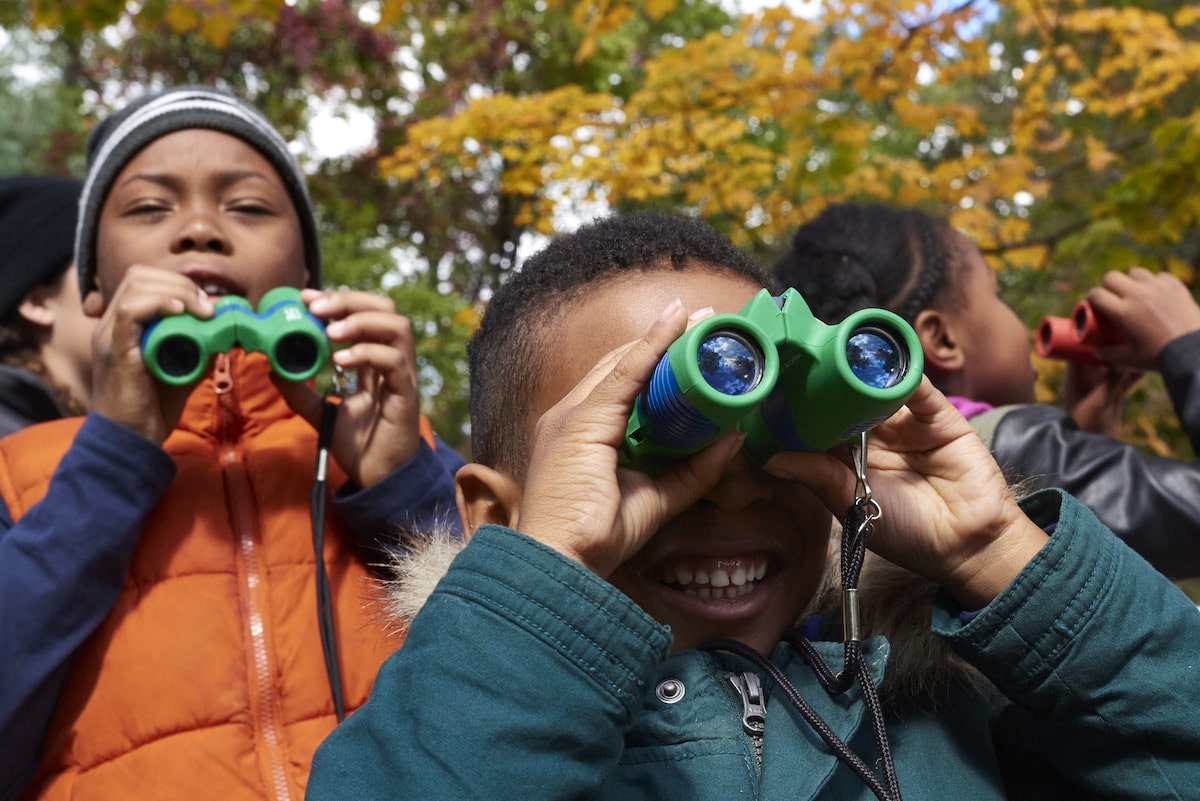
Nature Exploration: Tree Appreciation Month
Ongoing Museum Exhibit: Still Waters: Reflections of a Maritime Community
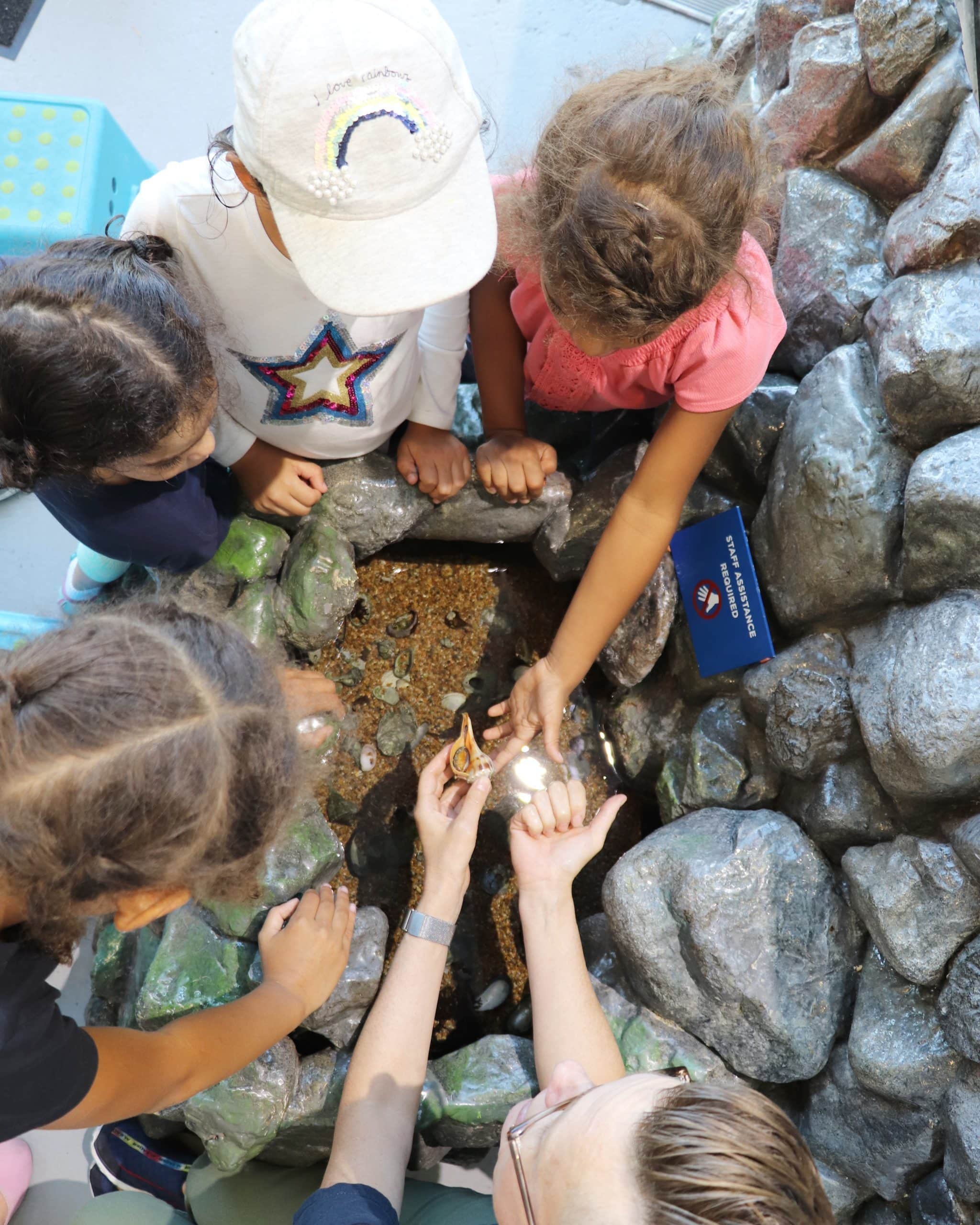
Open Hours at the Environmental Education Center – September 10
Keep going
- Free events in NYCEverything on the calendar with no ticket price, library programs included.
- Free art classes in NYCWhere the library creative courses fit among the city's other free instruction.
- Free things to do in NYC over 60Creative aging courses, tech help and older-adult programming across the city.
- Small NYC museums worth the tripThe smaller institutions where Culture Pass reservations are easiest to get.