Things to do in Brooklyn, organized the way the borough actually works
Most Brooklyn guides stop at Williamsburg and DUMBO. This one covers the whole borough, with verified admission rules, closure days and the free windows that are easy to miss.
By Alex Oz · · 8 min read

Start with the lines, not the map
Brooklyn is larger than most visitors expect and it has no single center. There is no Brooklyn equivalent of Midtown that everything radiates from. What exists instead is a set of subway trunk lines running roughly north to south, and nearly every trip you take will be along one of them. Planning by line rather than by distance on a map is the one habit that saves the most time here.
The 2 and 3 run along Eastern Parkway on the east side of Prospect Park, which is where the Brooklyn Museum, the Brooklyn Botanic Garden and the Brooklyn Public Library's Central Library sit within a few minutes of each other. The B and Q cut through on the Brighton Line, stopping at Prospect Park and continuing south through Flatbush, Midwood and Brighton Beach to Coney Island. The A and C run under Fulton Street through Downtown Brooklyn, Clinton Hill and Bedford-Stuyvesant. The R follows Fourth Avenue through Park Slope, Sunset Park and Bay Ridge. The L serves Williamsburg and Bushwick. The G is the only line in the system that never enters Manhattan, linking Greenpoint and Williamsburg down through Fort Greene and Clinton Hill to Carroll Gardens, and it is what makes cross-Brooklyn trips possible without backtracking.
The corollary is that moving sideways between lines usually means riding back toward Downtown Brooklyn first. Two neighborhoods a mile apart can be forty minutes apart by train. For those hops, use the crosstown buses or a bike; the bus grid exists precisely where the trains do not go.
The Eastern Parkway cluster
If you have one day and want the highest density of worthwhile things per subway stop, get off at Eastern Parkway–Brooklyn Museum on the 2 or 3. The museum, the botanic garden, the Central Library and the northern edge of Prospect Park are all a short walk from that one station, and Grand Army Plaza is a stop away. You can spend a full day inside a half-mile radius without repeating yourself.
Brooklyn Museum
200 Eastern Parkway. 2/3 to Eastern Parkway–Brooklyn Museum. Wednesday to Sunday, 11 am to 6 pm; closed Monday and Tuesday.
General admission is a suggested contribution: $16 for adults, $10 for visitors 65 and over and for students with valid ID, and free for everyone 19 and under. Healthcare workers and active-duty military and their families get in free with ID. Ticketed special exhibitions are separate and run roughly $10 to $25 depending on category, so check what is currently on before assuming your contribution covers it.
The Egyptian holdings are among the strongest in the country, the American galleries are unusually good, and Judy Chicago's The Dinner Party has a permanent installation here. One practical note: the museum closes two days a week, which trips people up more than any other scheduling detail in Brooklyn.
First Saturdays is the museum's monthly free evening, starting at 5 pm with music, talks and film. It is free but registration is required and includes general admission, with tickets released weeks in advance and members getting first access. They go quickly. The event series page on the museum's site lists each month's theme and the date registration opens.
Brooklyn Botanic Garden
Entrances at 990 Washington Avenue and 455 Flatbush Avenue. 2/3 to Eastern Parkway–Brooklyn Museum, or B/Q/S to Prospect Park. Closed Mondays.
Adult admission is $22 at the box office and $23.67 online; seniors 65 and over and students 12 and up pay $16 at the box office. Children under 12 are always free. Buying at the gate is cheaper than buying online, which is the reverse of most places.
Two free routes matter. From December through February the garden is pay-what-you-wish Tuesday through Friday. Separately, Community Tickets are available free of charge every day for anyone who needs them, reserved through the garden's ticketing page, though availability is limited on peak days. Culture Pass covers up to two people. None of these are valid during ticketed events, and cherry blossom weekends are exactly the sort of ticketed event they exclude.
The Eastern Parkway entrance has been temporarily closed, so plan on the Flatbush Avenue or Washington Avenue gates. Check the hours page before going: closing times shift by season and by day, and last entry is thirty minutes before close.
Prospect Park
585 acres. B/Q/S to Prospect Park or Parkside Avenue, 2/3 to Grand Army Plaza, F/G to 15th Street–Prospect Park.
Olmsted and Vaux built this after Central Park and considered it the better of the two. The Long Meadow is the longest stretch of unbroken meadow in any American urban park, and the Ravine holds Brooklyn's only forest, roughly 150 acres of woodland with running water through it. The Lake covers about 60 acres. The park itself costs nothing.
The LeFrak Center at Lakeside runs ice skating, hockey and curling in winter and roller skating, boating and the park's largest splash pad in summer; rink sessions are ticketed. Prospect Park Zoo, on the Flatbush Avenue side, charges $10.95 for ages 13 and up, $8.95 for seniors 65 and over and $7.95 for children 3 to 12, with under-2s free.
Enter at a different gate than the one you know. Coming in at Parkside Avenue or Prospect Park Southwest puts you in a stretch of the park most people who use Grand Army Plaza have never walked.
The waterfront
Brooklyn Bridge Park runs 85 acres over about 1.3 miles of shoreline, from Atlantic Avenue up past the bridges, and it is open daily from 6 am to 1 am. Beyond the postcard views it has playing fields, sports courts, several playgrounds, picnic and barbecue areas, two dog runs, a pool and a non-motorized boat launch, plus more than 400 free programs a year.
The Brooklyn Bridge Park Boathouse runs free kayaking off the Pier 2 dock in the summer months. No experience needed, life vests provided, everyone signs a waiver, and anyone under 18 needs an adult with them. Reservations through the boathouse's own site are strongly recommended. Jane's Carousel, a 1922 Philadelphia Toboggan Company machine restored and housed in a glass pavilion under the Brooklyn Bridge, runs year-round but is closed every Tuesday; ride prices and hours live on the carousel's own site.
The cheapest good boat ride in the city is NYC Ferry at $4 for an adult one-way. The East River route stops at DUMBO/Fulton Ferry, South Williamsburg, North Williamsburg and Greenpoint. The South Brooklyn route runs Atlantic Avenue/Pier 6, Red Hook, Sunset Park/Brooklyn Army Terminal and Bay Ridge, and picks up Governors Island on weekdays. That South Brooklyn leg is the underused one: it puts you in Red Hook and at the Army Terminal, both of which are painful to reach by subway.
If you want the bridge walk, start on the Brooklyn side and walk toward Manhattan in the early morning. The Brooklyn Heights Promenade, cantilevered over the expressway a few blocks south, gives you the same harbor view with a fraction of the foot traffic.
Museums that are not the Brooklyn Museum
Four institutions are worth structuring a day around, and three of them are cheap or free. All four sit outside the neighborhoods most guides cover.
New York Transit Museum
99 Schermerhorn Street, Brooklyn Heights. Wednesday to Sunday, 10 am to 4 pm. $10 adults; $5 for ages 2 to 17, seniors 62 and over, and visitors with disabilities.
The museum occupies a decommissioned 1936 subway station, and the platform level is lined with vintage cars you can walk through and sit in. It is the rare museum that is better for adults than they expect and better for children than almost anything else in the borough. Advance reservations are strongly encouraged. The museum's Grand Central gallery and store in Manhattan is free and open daily.
Weeksville Heritage Center
158 Buffalo Avenue, Crown Heights. Tuesday to Friday 10 am to 5 pm, Saturday 11 am to 5 pm. Free.
Weeksville was one of the largest free Black communities in the United States before the Civil War, founded by Black landowners in the 1830s, and four of its Hunterfly Road houses survive on the site. The center is free and open to the public; guided tours of the houses carry a separate cost and must be booked at least 24 hours ahead.
The historic houses have one to three steps at the entries, no modern climate control, and cannot accommodate wheelchairs or strollers inside. Take the A or C to Utica Avenue, the C to Ralph Avenue, or the 3 or 4 to Crown Heights–Utica Avenue.
Brooklyn Children's Museum
145 Brooklyn Avenue, Crown Heights. Wednesday to Sunday, 10 am to 5 pm.
Founded in 1899 as the first museum built specifically for children, and no longer running on the timed-session model it used for a while. Community Access Thursdays run 2 to 5 pm at no cost, with online reservation recommended. EBT and SNAP cardholders get in free, Cool Culture cardholders get in free, and IDNYC holders are eligible for a free individual membership. Teachers, veterans, healthcare workers and military get discounts.
There is no museum parking lot. It is close enough to Weeksville to do both in an afternoon, which is a better Crown Heights day than most itineraries offer.
Green-Wood Cemetery
Main entrance at Fifth Avenue and 25th Street, Sunset Park. Open daily 7 am to 7 pm. Free.
Admission to Green-Wood and to the Green-House is always free. This is a working cemetery, a National Historic Landmark and, functionally, an arboretum sitting on the high ground where the Battle of Long Island was fought. The Gothic Revival gates alone justify the trip, and a colony of monk parakeets nests in them.
Take the R to 25th Street and walk one block east, uphill, to the main gate. There is a free mobile guide through Bloomberg Connects for self-guided visits, and the cemetery runs paid walking tours; outside tour groups are charged per attendee. Read the rules page before you go, and behave like you are in a cemetery, because you are. It is also one of the few major Brooklyn sites open every day, which makes it the right call on a Monday.
Coney Island and the southern shore
Four lines converge at Coney Island–Stillwell Avenue: the D, F, N and Q. The ride down is long from most of Brooklyn but the terminal drops you a block from the boardwalk.
The boardwalk and the beach are free and open year-round, covering nearly three miles with volleyball, handball and basketball courts and playgrounds along the way. Swimming is a different matter: it is permitted only during the official beach season, roughly Memorial Day weekend through Labor Day, and only while lifeguards are on duty, generally 10 am to 6 pm. Swimming outside those hours is prohibited and enforced. Confirm current dates and hours on the Parks site before you plan a swim day.
Luna Park has no mandatory entry fee. You buy individual ride credits at the booths or an unlimited wristband, so walking in and riding nothing costs nothing. Operating dates and hours are seasonal and change year to year, so check the park calendar rather than assuming.
The New York Aquarium at 602 Surf Avenue is the expensive stop: adults $29.95 off-peak and $32.95 peak, seniors 65 and over $27.95 and $29.95, children 3 to 12 $25.95 and $27.95. It closes earlier in winter than in summer, with last hours around 4 pm in fall and 3:30 pm from November on. Parking runs $18 to $40 depending on how long you stay, which is another argument for the train.
One stop back up the B and Q line is Brighton Beach, quieter sand and an entirely different neighborhood. Manhattan Beach sits further east. The southern shore in October and November, empty and cold with the Wonder Wheel stopped, is better than the same walk in July.
What is genuinely free, and what has a free window
Always free: Prospect Park, Brooklyn Bridge Park, Green-Wood Cemetery, Fort Greene Park, the beaches and the Coney Island boardwalk, Weeksville Heritage Center, and the Central Library at Grand Army Plaza, which runs exhibitions and public programs alongside the stacks.
Free with a condition: the Brooklyn Museum is free for everyone 19 and under, and its general admission is a suggested contribution, meaning you can pay less than $16 at the desk. First Saturdays are free but require advance registration. The Brooklyn Botanic Garden is pay-what-you-wish Tuesday through Friday from December through February, and its Community Tickets are free every day of the year for anyone who needs them, reserved online. Brooklyn Children's Museum is free on Community Access Thursdays from 2 to 5 pm.
Culture Pass is the most underused thing on this list. Any Brooklyn, New York or Queens Public Library cardholder aged 13 and up can reserve free passes to more than 100 venues, including the Botanic Garden. You reserve by date, availability is finite, and passes are not valid during ticketed events or nonpublic hours.
Also free: kayaking off Pier 2 in Brooklyn Bridge Park in summer, and the several hundred free programs the park runs annually, from bike lessons to fitness classes to performances. Admission rules change more often than anything else in this guide, so confirm on the institution's own site before you travel across the borough for a free window.
Eating, by neighborhood
The useful thing to know about Brooklyn food is not which restaurant is good this month but where the concentrations are, because a neighborhood with fifty places serving one cuisine will produce better food at lower prices than a single celebrated room.
Sunset Park holds two of them at once: Chinese along Eighth Avenue, heavily Fujianese and Cantonese, and Mexican along Fifth Avenue, much of it Pueblan. Bay Ridge, further down the R, has a long-established Levantine strip of Syrian, Lebanese and Palestinian bakeries, butchers and sweet shops. Bensonhurst layers Italian along Eighteenth Avenue over newer Chinese businesses on Eighty-Sixth Street.
Brighton Beach and Sheepshead Bay are Russian, Ukrainian, Georgian, Uzbek and Turkish, and the food halls and appetizing stores are as much of the point as the restaurants. Coney Island Avenue through Midwood and Kensington runs Pakistani and Bangladeshi, with kosher shops thick along Avenue J and the streets around it.
Crown Heights and Flatbush, along Nostrand, Utica and Church Avenues, are Caribbean, with Trinidadian, Jamaican and Haitian cooking and the bakery and roti-shop economy that comes with it. Bedford-Stuyvesant carries Southern cooking and West African places along Fulton. Greenpoint is Polish along Manhattan Avenue. South Williamsburg is Dominican and Puerto Rican on one side of Broadway and Hasidic kosher on the other. Atlantic Avenue in Boerum Hill keeps a handful of Middle Eastern grocers from an older era of the street.
Pick the neighborhood first, get off the train, and walk two or three blocks before choosing. That method has never failed me in any of these places.
Brooklyn events coming up
Live listings across the borough, from Coney Island to Greenpoint. Admission rules and hours change, so confirm details on the organizer's page before you travel.
Updated Sep 8, 5:16 PM EDT
Kids in Motion: Brownsville Playground
Kids in Motion: John J Carty Park
Kids In Motion: St. John's park
Kids in Motion: Breevort Playground
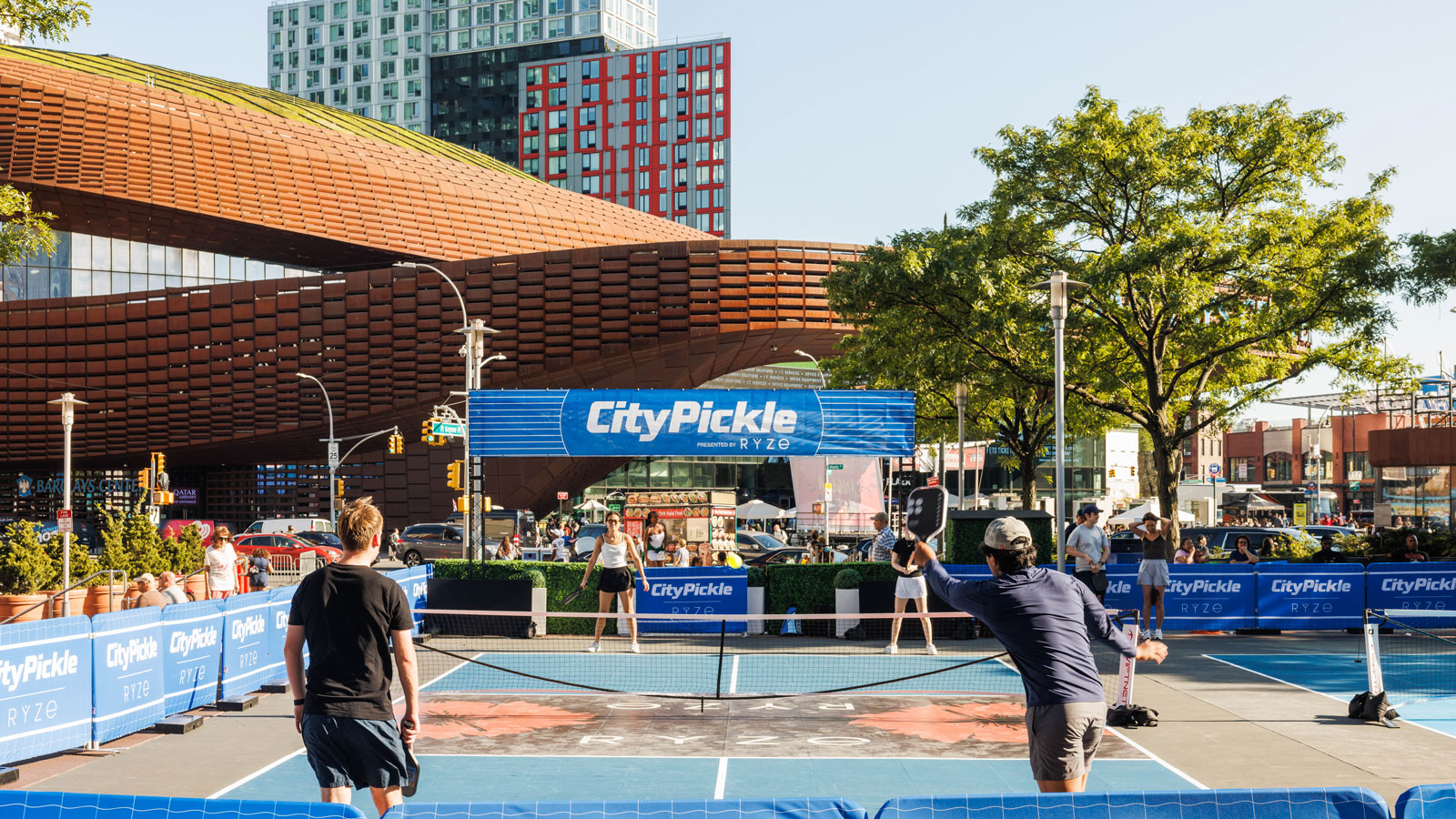
City Pickle @ Atlantic Terminal
Angling for a Fish
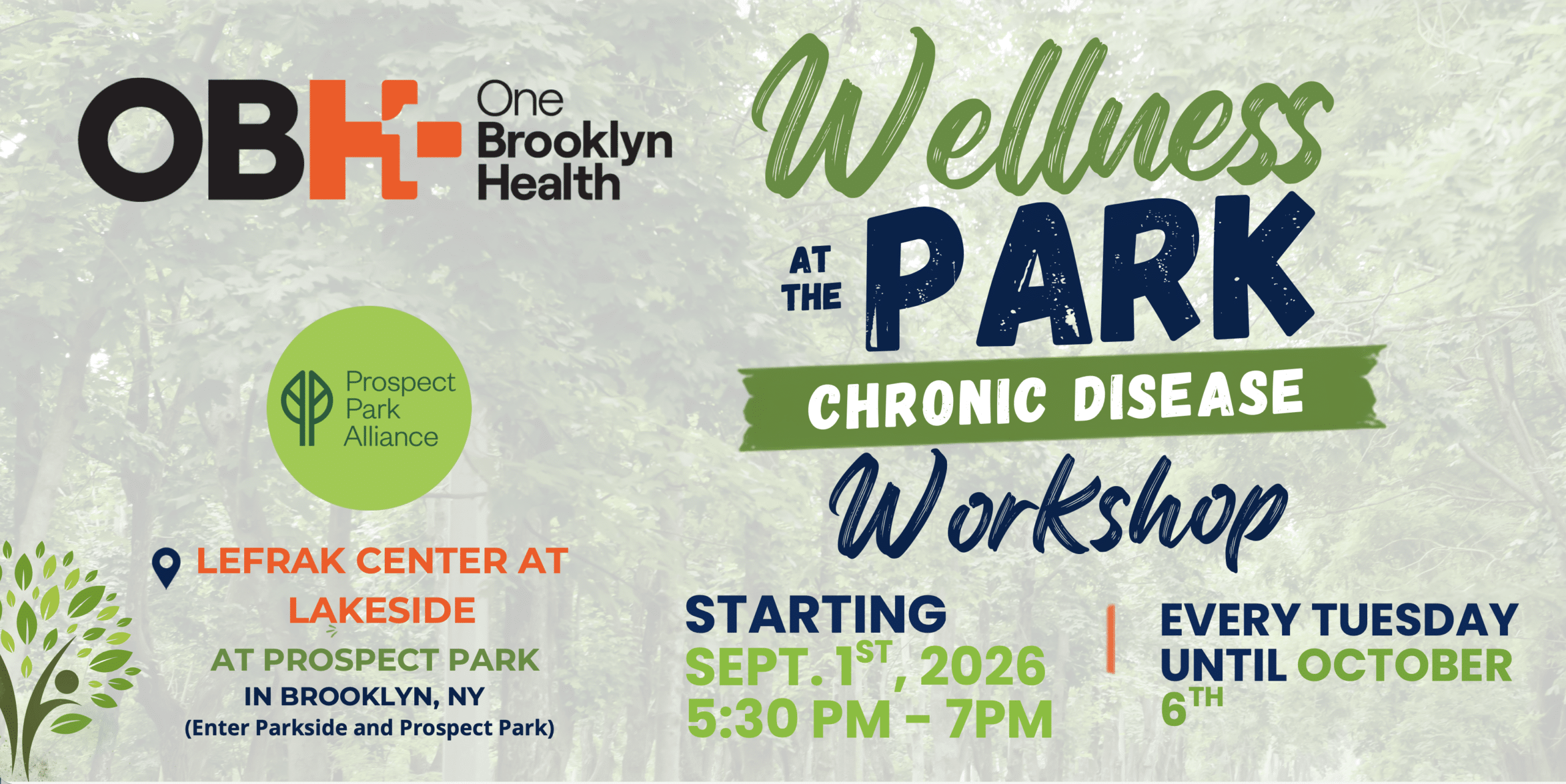
Wellness at the Park: Chronic Disease Self-Management Program
Hatha Flow
Keep going
- Prospect Park weekend guideWhich entrance to use, where the Ravine trails actually start, and what runs at Lakeside by season.
- Free events in Brooklyn and citywideFiltered listings for no-cost events, including free museum windows as they come up.
- Free things to do with kids in NYCCovers Community Access Thursdays, playground picks and the free waterfront programs in more detail.
- Everything happening in BrooklynThe full borough listing, sortable by date and neighborhood.